How Z-FLAG Embedded SpatialChat Into Daily Workflows, Driving Continuous Team Collaboration
Z-FLAG deployed SpatialChat as a persistent virtual office, supporting daily team collaboration through ongoing conversations, notifications, and presence features. Multi-year adoption and workflow integration demonstrate the platform’s stickiness beyond event-based usage.
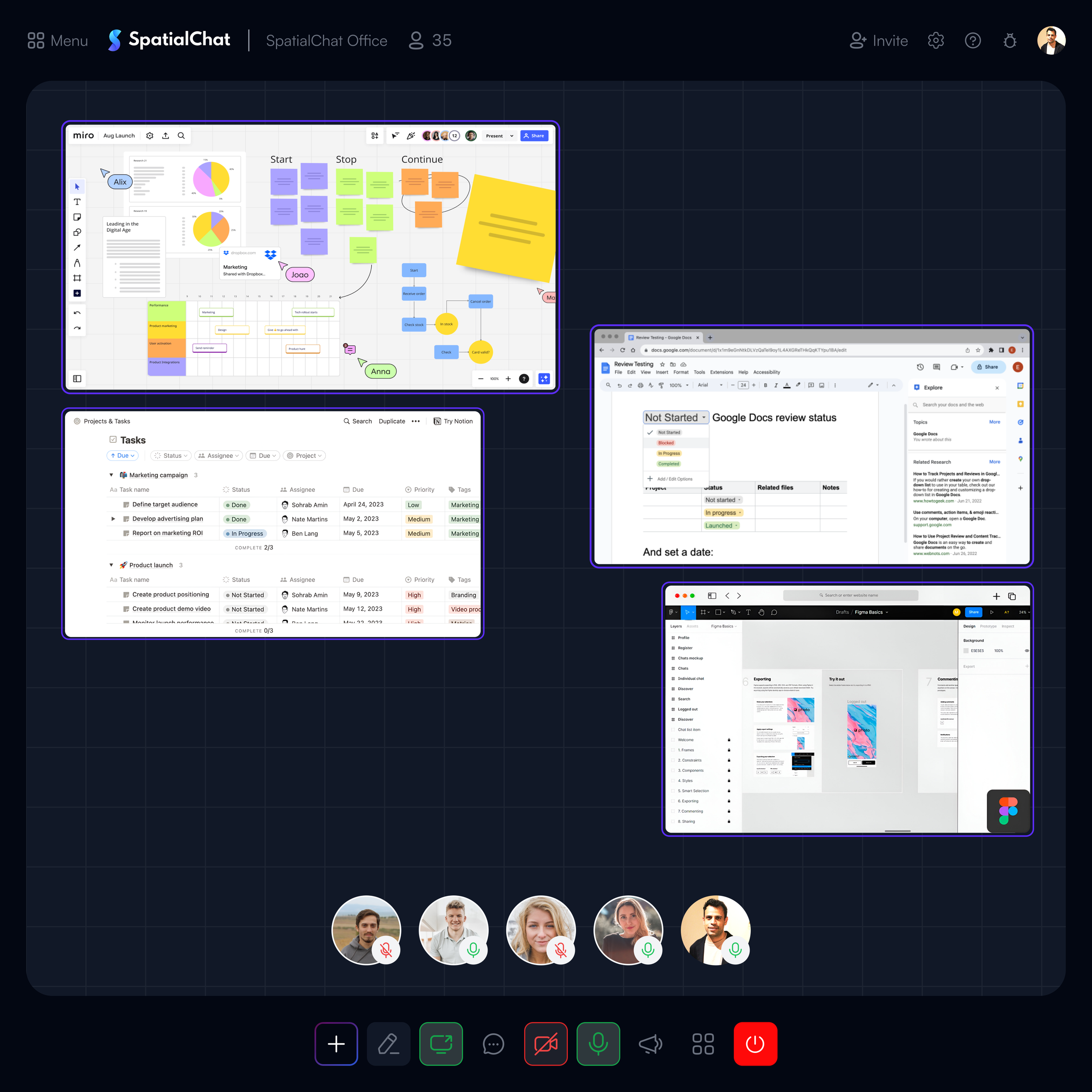
Context: Embedding a Virtual Workspace into Daily Operations
Z-FLAG implemented SpatialChat as an always-on virtual workspace to support remote team collaboration. Unlike event-driven deployments, this use case reflects continuous usage, where the platform becomes a core layer of team communication and coordination.
Using an annual subscription under the Regular Plan, the team created a dedicated space for daily interaction. This environment enabled informal conversations, quick check-ins, and collaborative coordination throughout the workday. By providing a persistent space rather than discrete meeting rooms, SpatialChat allowed the team to replicate the dynamics of a physical office within a virtual setting.
Over time, team members incorporated the platform into daily workflows, demonstrating reliance on SpatialChat not only for structured discussions but also for spontaneous interaction and task coordination. The closed-won deal and annual commitment highlight confidence in the platform’s ability to support ongoing operational needs.
The Challenge: Replicating Office Dynamics in a Remote Team
Even small remote teams face challenges in maintaining presence, spontaneity, and engagement without structured meetings. Standard tools like video calls or chat platforms often fail to recreate informal conversations or the natural flow of in-office communication.
Z-FLAG’s primary challenge was to establish a virtual environment where team members could:
- Engage in multiple concurrent conversations organically
- Stay aware of colleagues’ presence and activity
- Coordinate tasks without rigid schedules or meeting fatigue
The objective was a persistent virtual workspace that encourages active participation while fitting seamlessly into daily workflows.
What Z-FLAG Implemented
The team deployed SpatialChat as a shared, always-on virtual office. Users logged in during work hours to interact with colleagues, leveraging notifications, spatial presence indicators, and the platform’s fluid movement features to support natural conversation flow.
This setup allowed multiple threads of discussion to occur simultaneously, ranging from informal chats to work-related coordination. The continuous usage model replaced or complemented existing communication tools, enabling a single space where team members could interact throughout the day.
The virtual office approach also allowed the team to explore interaction patterns, optimize collaboration workflows, and refine how daily work was structured within a spatial environment. Over time, the team’s reliance on the platform increased, reinforcing the platform’s value in embedding collaboration into routine operations.
Results: Engagement Metrics from Persistent Virtual Office
Analysis of Z-FLAG’s deployment demonstrates measurable outcomes for ongoing, workflow-driven usage:
- Persistent daily usage: Team members actively logged in and interacted within the space each workday
- Multi-threaded conversations: Multiple discussions occurred concurrently, reflecting fluid collaboration dynamics
- High workflow integration: Daily engagement replaced or supplemented traditional tools, embedding SpatialChat into regular operations
- Subscription commitment: Annual plan adoption indicates long-term reliance and confidence in the platform
- Interaction density: Users participated in several simultaneous conversation threads per day, supporting informal and structured collaboration
These metrics show that SpatialChat effectively functions as a virtual office layer, supporting high engagement even without event-based spikes. Team communication becomes more continuous and natural, while collaboration workflows remain uninterrupted by meeting scheduling constraints.
What the Engagement Demonstrated
Z-FLAG’s use of SpatialChat highlights the platform’s ability to serve as a persistent virtual workspace rather than a one-off event tool. By enabling continuous interactions, fluid discussion clusters, and workflow integration, the platform demonstrates high stickiness and retention when embedded in daily team routines.
The case illustrates that even small remote teams can achieve meaningful engagement, maintain natural collaboration, and coordinate effectively in a spatial environment. SpatialChat’s persistent virtual office capabilities allow organizations to replicate office dynamics, support multi-threaded conversations, and embed a central collaboration layer into everyday operations.
Overall, this deployment shows that long-term adoption of SpatialChat can transform remote work practices, delivering measurable engagement, consistent team presence, and stronger internal collaboration across daily workflows.