How the World Olympians Association Built a Living Digital Community for Global Athletes with SpatialChat
The World Olympians Association used SpatialChat to create always-on global spaces where Olympians could connect beyond scheduled calls. With active environments and continuous participation, the platform enabled real-time interaction, informal conversations, and a stronger sense of community.
The Context Behind the Shift
For a global network like the World Olympians Association, community is everything. But maintaining that sense of connection across geographies is a constant challenge. With members spread across continents, traditional tools like chat platforms and scheduled video calls created fragmented, time-bound interactions rather than a shared sense of presence.
What the organization needed was not another communication tool, but a space that could exist continuously, allowing members to drop in, interact, and engage on their own terms. The goal was to move beyond coordination and into connection, creating an environment where conversations could happen naturally, without the need for scheduling or structure.
Designing a Space That’s Always On
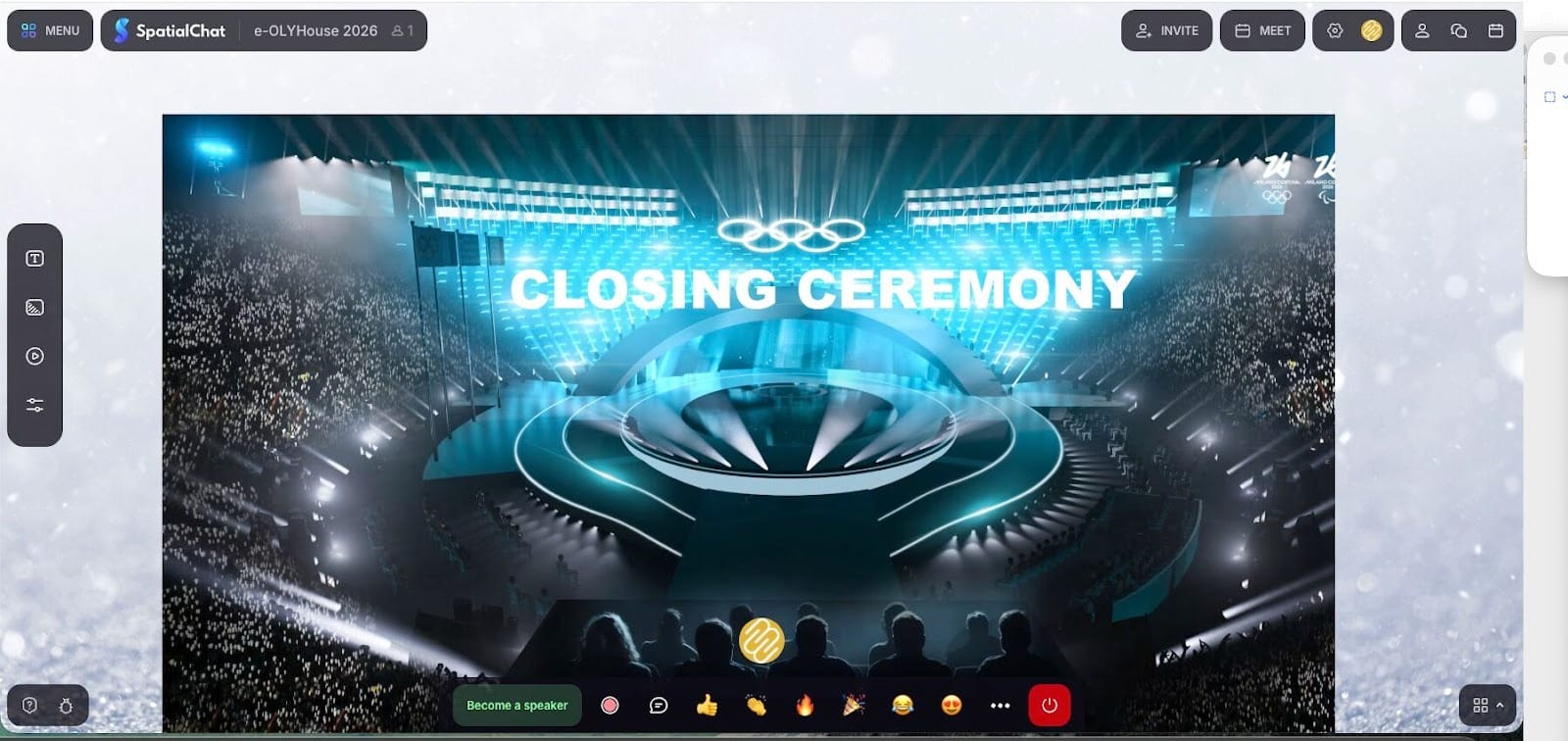
To bring this vision to life, the World Olympians Association in partnership with MeetingMasters set up two parallel environments within SpatialChat: a primary “WOA” space and a secondary “OLYHouse” space. Each environment was designed to support up to 100 participants, ensuring that interactions remained manageable while still accommodating a global audience.
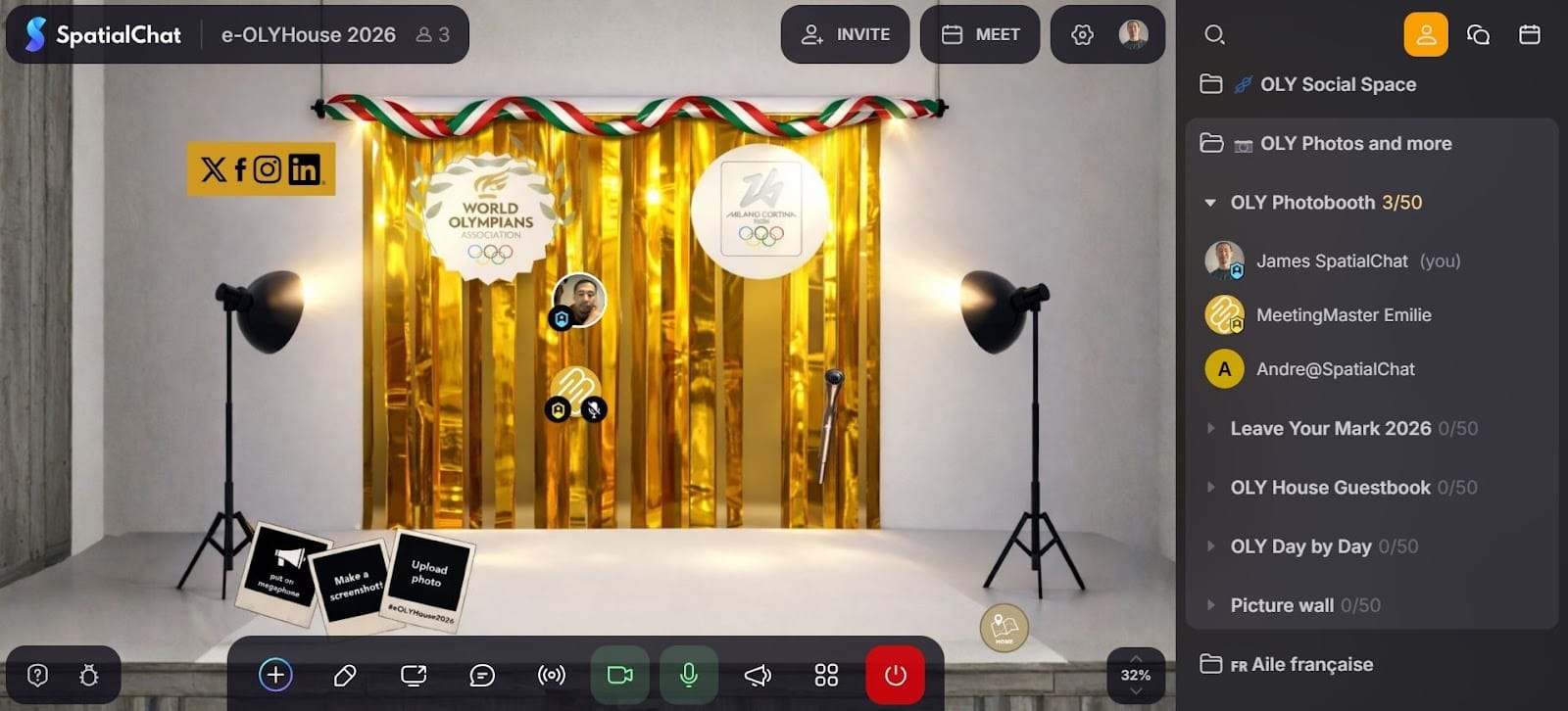
This multi-space structure allowed the organization to segment interactions based on context. While the main space acted as a central hub for general engagement, OLYHouse provided a more focused or themed environment for specific conversations. Together, these spaces formed a flexible ecosystem that could adapt to different types of interactions.
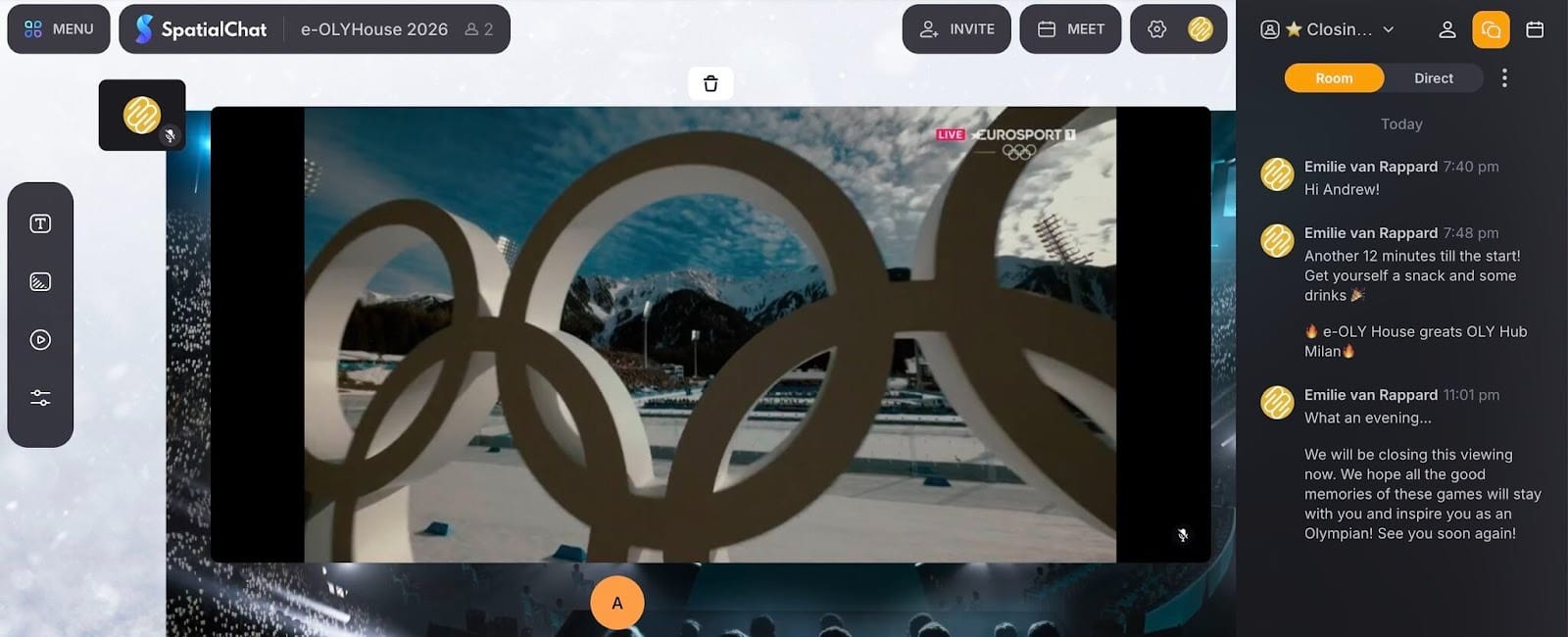
The most important design choice, however, was persistence. Unlike event-based setups, these spaces remained active and accessible at all times. Members could enter and leave as they wished, creating a continuous layer of interaction that mirrored real-world community spaces.
How the Community Came to Life
Once live, the spaces quickly evolved into dynamic environments shaped by participant behavior. Members didn’t log in for a single session; they returned repeatedly, engaging in conversations whenever it suited them. Interactions naturally formed in small clusters, with participants gravitating toward discussions that interested them. Spatial audio enabled these conversations to happen simultaneously without interference, allowing multiple groups to coexist within the same space.
Movement played a subtle but powerful role. Members could move between conversations, listen in before joining, or shift between spaces depending on the context. This created a sense of fluidity that is rarely achieved in traditional digital platforms.
The result was an environment that felt less like a tool and more like a place where presence, rather than scheduling, defined participation.
What Ongoing Engagement Looked Like
The sustained use of both the WOA and OLYHouse spaces highlighted a clear shift from event-based engagement to continuous interaction. Rather than spikes of activity tied to specific sessions, engagement was distributed over time, with members accessing the spaces repeatedly.
Across both environments, interaction density remained consistently high. Conversations were frequent and varied, with participants engaging in multiple discussions during a single visit. The 100-user capacity per space ensured that interactions remained meaningful, avoiding the overcrowding that often limits participation in larger formats.
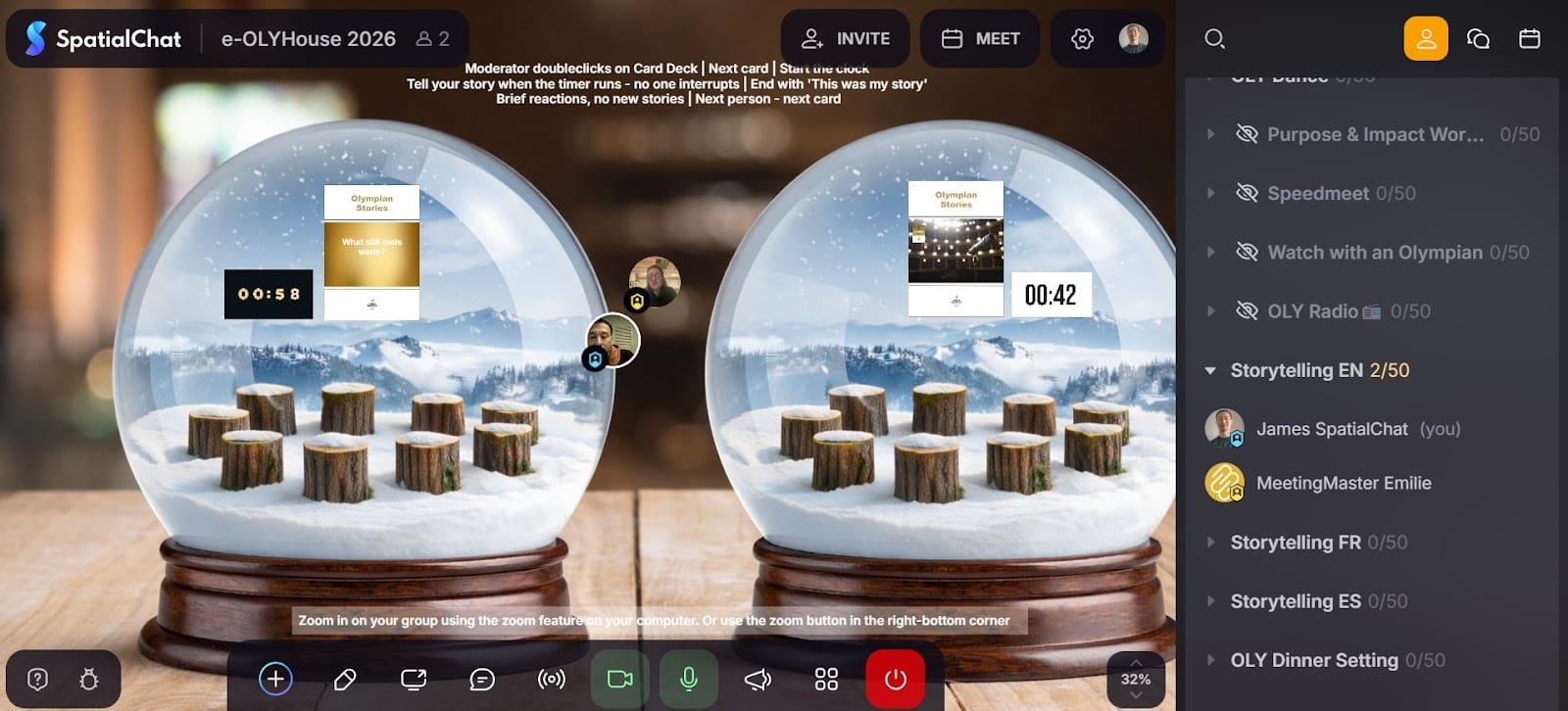
The use of multiple spaces also indicated a growing need for segmentation. As participation expanded, the ability to distribute interactions across environments helped maintain clarity and focus, allowing different types of conversations to thrive simultaneously.
This pattern of usage reflected a community that was not just present, but actively engaged by returning, interacting, and contributing on an ongoing basis.
From Communication to Shared Presence
What set this implementation apart was its ability to recreate a sense of “being there.” Unlike chat threads or scheduled calls, where interaction is either delayed or time-bound, SpatialChat enabled real-time, spontaneous engagement.
Members could enter a space and immediately see who was present, join conversations organically, and experience the subtle dynamics of proximity and movement. This created a stronger sense of connection, making interactions feel more personal and immediate.
For an organization built around shared experiences and identity, this shift was significant. It allowed the community to exist not just as a network, but as an active, living environment.
Building a Community That Exists Beyond Events
The World Olympians Association’s use of SpatialChat demonstrates how digital platforms can move beyond facilitating communication to enabling true community. By creating persistent, multi-space environments, the organization provided its members with a place to connect continuously, rather than intermittently.
The result was a model of engagement that is not tied to specific moments, but sustained over time, where conversations happen naturally, participation feels effortless, and the community remains active regardless of geography.
In doing so, the association transformed its digital presence into something far more powerful: a shared space where its global network could come together, interact, and stay connected in a way that feels real.