Virtual Event Platform: The Complete Guide (2026)
A complete guide to virtual event platforms: what they are, real 2026 pricing, core features, and how buying criteria have shifted this year.
TL;DR
- A virtual event platform is purpose-built software for hosting webinars, conferences, trade shows, and networking events, distinct from meeting tools like Zoom or Teams.
- The market is valued at $15.99 billion in 2025 and projected to reach $41.12 billion by 2035, so this isn't a shrinking category.
- Core delivery features like streaming and registration are now table stakes; what actually differentiates platforms in 2026 is what happens after the live event ends.
- Pricing ranges from free tiers for small meetups to $25,000+ per year for enterprise programs, so cost depends on scale and features, not the category itself.
- The right platform depends on your event type and size, not which one has the longest feature list.
A webinar tool and a virtual event platform look similar from a login screen, but they solve different problems. One handles a single session with a presenter and an audience; the other manages registration, multiple tracks, sponsor booths, and networking for thousands of attendees at once.
This guide covers what a virtual event platform actually is, what it costs, and how evaluation criteria have shifted heading into 2026.
The category isn't shrinking. The virtual event platform market was valued at $15.99 billion in 2025, and it's projected to reach $41.12 billion by 2035. But the buying decision has changed: streaming quality and basic chat tools used to be a real differentiator, and now they're assumed.
What Is a Virtual Event Platform?
A virtual event platform is software built to host online events with multiple sessions, larger audiences, and structured engagement, things a standard video call tool was never designed for.
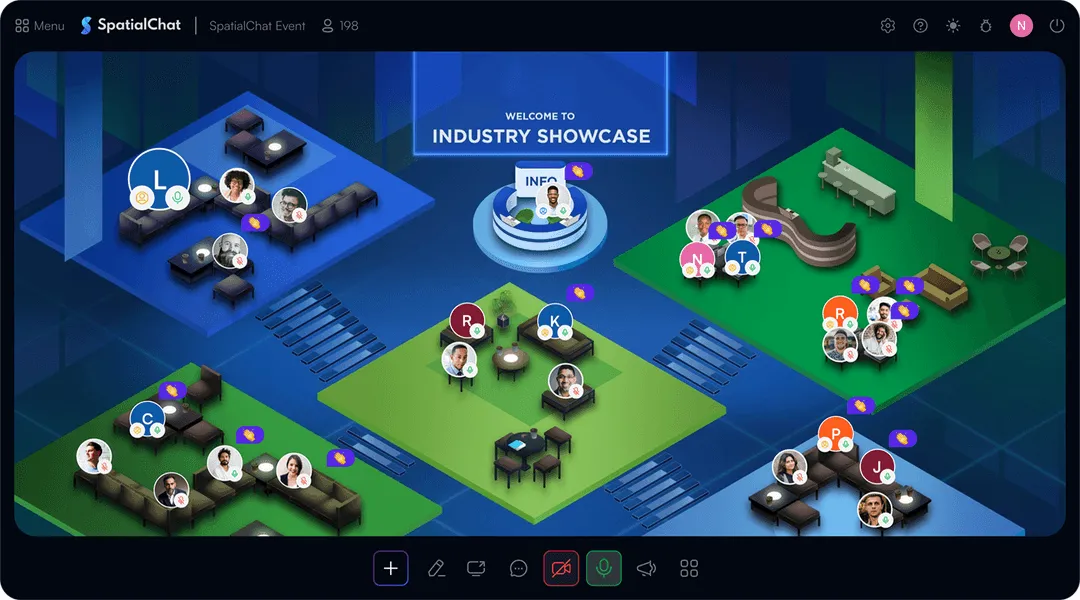
It typically bundles registration, live streaming, breakout sessions, sponsor or exhibitor tools, and post-event analytics into one product.
Video conferencing software like Zoom or Microsoft Teams is built for meetings. A virtual event platform like SpatialChat is built for events, with a fundamentally different scale and structure in mind. The practical differences show up fast:
- Registration and ticketing, not just a meeting link
- Multiple concurrent sessions or tracks, not one call
- Sponsor booths and lead capture, not a shared screen
- Attendee-level analytics, not just a participant count
- Support for hundreds or thousands of attendees, not a capped headcount
A team that only needs a recurring internal meeting doesn't need a virtual event platform. A team running a multi-day conference, trade show, or company-wide town hall does.
For a deeper look at how the planning itself changes, see key differences in planning virtual vs. physical events.
Types of Virtual Events These Platforms Support
Virtual event platforms flex across a wide range of formats, not just webinars. The most common types include:
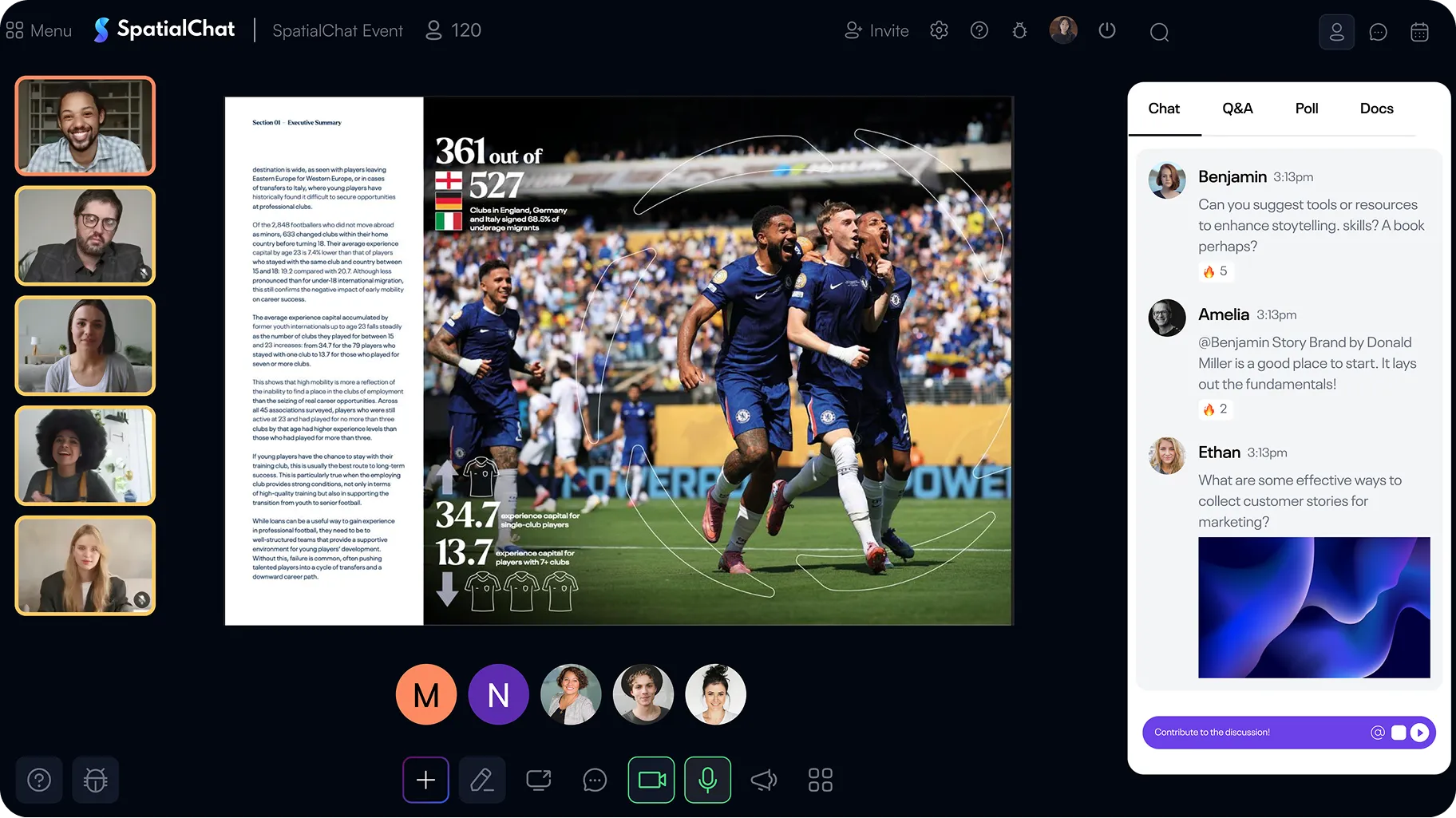
- Webinars and single-session presentations
- Multi-track conferences and summits
- Trade shows and virtual exhibitions
- Career fairs and recruiting events
- Company town halls and all-hands meetings
- Networking events and community mixers
- Product launches and sales kickoffs
Not every platform handles every format equally well. A platform built around large-scale broadcast might struggle with the small-group networking a career fair or mixer needs, and vice versa.
For format-specific ideas, see 10 virtual event formats driving success.
Core Features to Look For
The specific features that matter depend on the event type, but a few show up across nearly every serious platform evaluation:
- Registration and ticketing, including custom forms and payment processing
- Live streaming with reliable uptime at your expected attendee count
- Breakout rooms or networking spaces for smaller group interaction
- Sponsor and exhibitor tools, including virtual booths and lead capture
- Engagement tools: polls, live Q&A, and chat
- Analytics on attendance, session engagement, and drop-off points
- Integrations with your CRM or marketing automation platform
Treat this as a baseline, not a differentiator. As the next section covers, these features have become expected rather than a reason to choose one platform over another.
What Virtual Event Platforms Cost
Pricing varies enormously by scale, and there's no single number that applies across the category. Rough benchmarks:
- Small events (under 100 attendees): free to $500/month on freemium or entry-level plans
- Mid-size events (100-2,500 attendees): roughly $625 to $8,000 per event or per month, depending on the vendor
- Large-scale enterprise programs (3,000+ attendees): $25,000 to $40,000 or more per year, often on annual contracts
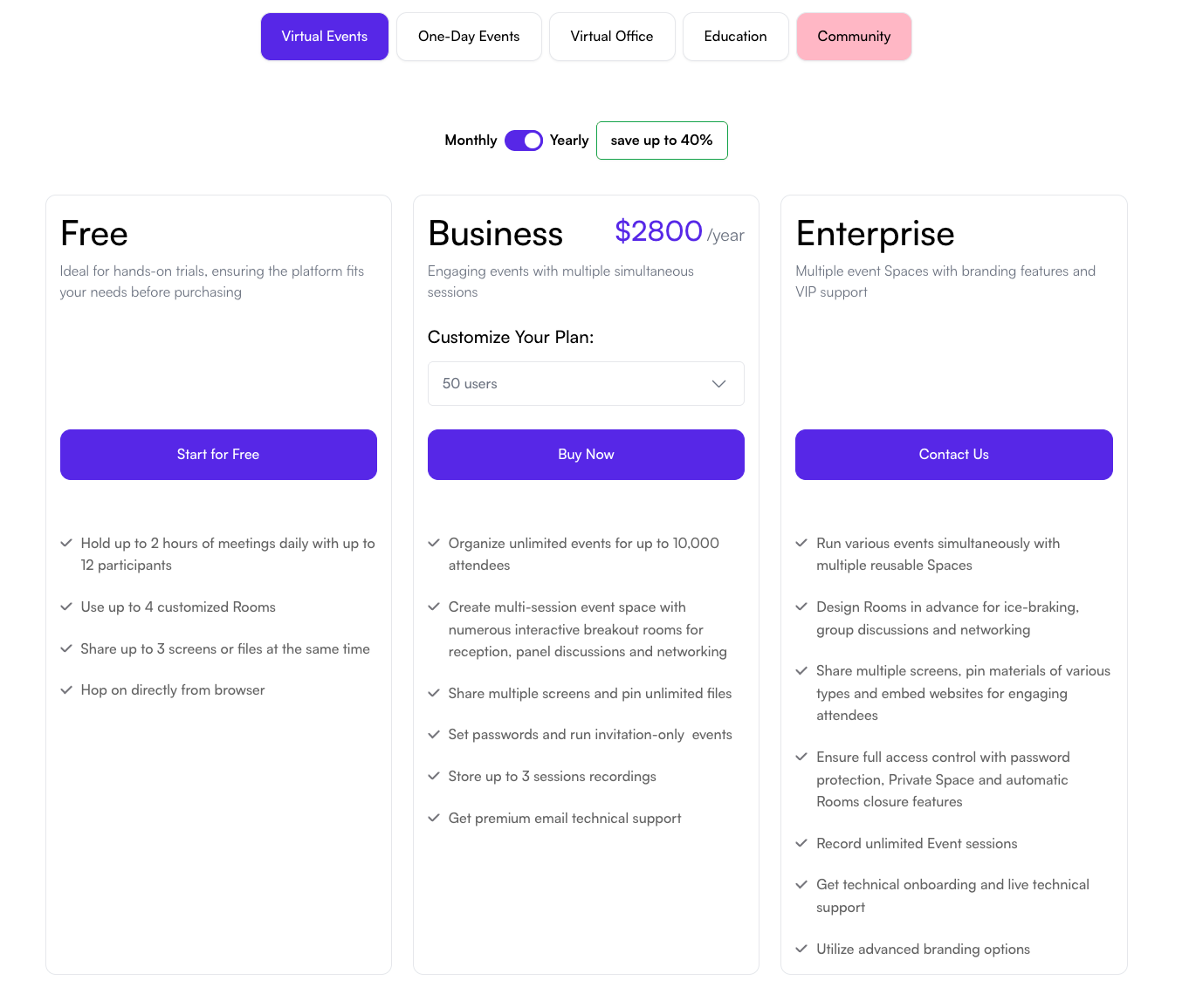
SpatialChat's own pricing is a useful example of transparent, tiered pricing by event type and attendee count.
Most platforms use one of three pricing models: flat subscription tiers, pay-per-attendee, or a hybrid that combines a base fee with attendee-based add-ons. Support, premium integrations, and white-label branding are common places where the sticker price grows past the advertised starting tier.
Budget for more than the platform itself. Registration tools, email marketing, and dedicated support packages are sometimes bundled and sometimes billed separately, and that gap is where a lot of virtual event budgets go over.
2026 Trends Shaping Virtual Event Platforms
For years, the buying question was simple: can this platform actually run an event without breaking? Forrester's Conrad Mills put it plainly in a March 2026 analysis of the market: "the real competition has shifted to what platforms enable outside of the live event."
Registration, streaming, and basic engagement tools are now table stakes. Vendors surveyed for Forrester's Q1 2026 Virtual Event Management Platforms Landscape largely agreed on this themselves. The evaluation criteria that actually separate platforms in 2026 look different:
- Post-event content activation: turning a session into clips, summaries, and follow-up emails automatically, not manually
- AI as three distinct capabilities, not one generic feature: content generation, matchmaking, and analytics
- Data that connects to what happens after the event, like pipeline and follow-up engagement, not just attendance numbers
If a platform's pitch stops at "we can stream your event reliably," that's no longer a differentiator, it's the minimum. For more on how AI specifically factors into this shift, see the future of AI in virtual events.
Top Virtual Event Platforms to Pay Attention To
A quick snapshot of four platforms worth evaluating, each built around a different priority:
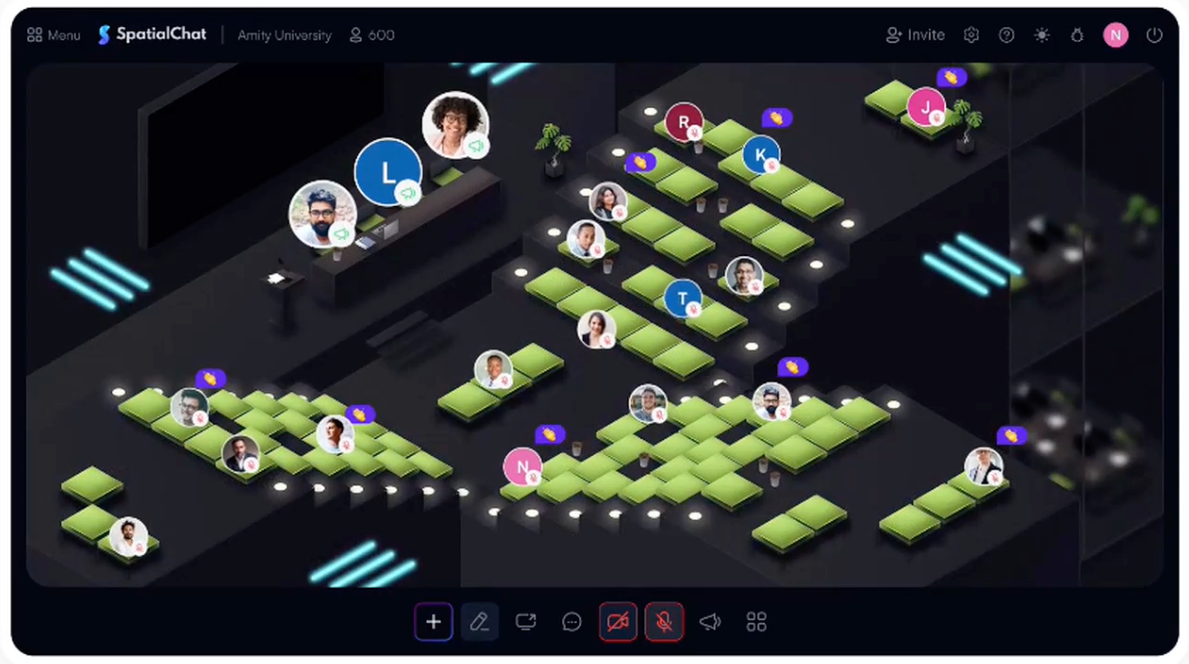
SpatialChat (spatial, movement-based networking): free tier available, with paid plans scaling by attendee count. Supports up to 10,000 attendees with proximity audio that mimics real in-person conversation.
- Cvent (large enterprise programs with venue-sourcing needs): pricing isn't published; annual licenses run roughly $20,000 to $79,000+, plus $7-12 per registrant.
- vFairs (immersive, branded 3D trade shows and career fairs): fully custom quote, typically comparable to or higher than Cvent for specialized deployments.
- Zuddl (B2B marketing teams tracking events through to pipeline): starts around $10,000/year, with deep CRM sync to Salesforce, HubSpot, and Marketo.
None of these is universally "best." Match the pick to your actual priority: networking quality, enterprise scale, immersive branding, or marketing attribution.
How to Choose the Right Platform
Match the platform to the event, not the other way around. A few practical starting points:
- For a single-session webinar, a lightweight platform with strong streaming and registration is enough. A full event-management suite is overkill.
- For a multi-track conference, prioritize concurrent session support and sponsor tools over anything else.
- For networking-focused events, look specifically at how the platform handles unscheduled, small-group conversation, since this is where many platforms are weakest.
- For recurring internal events like town halls, weigh setup time and ease of use heavily, since you'll be doing this repeatedly.
Request a trial or demo before committing, and test it with the group size and format you'll actually use, not a generic sales demo. A platform that looks great for 50 people can fall apart at 2,000, and the reverse is just as common.
For a step-by-step version of this process, see smart steps to finding the best all-in-one virtual event platform.
Common Mistakes to Avoid When Choosing a Platform
A few mistakes come up repeatedly in platform selection:
- Choosing based on the features list alone, without testing at your actual expected attendee count
- Underestimating the true cost, since add-ons for support, integrations, and branding stack up fast
- Picking a broadcast-focused platform for a networking-focused event, or vice versa
- Ignoring what happens to content after the event ends, then scrambling to repurpose it manually
- Skipping a live test run with real presenters before the actual event
Most of these aren't dramatic failures. They're avoidable if you test the platform against your specific event, not a generic demo.
How SpatialChat Approaches Virtual Events
Most virtual event platforms are built around a stage: one speaker, one screen, an audience watching. SpatialChat is built around a room instead, where attendees move between conversation clusters and proximity audio changes volume based on how close you are to a group.
This directly addresses networking, one of the weakest points across most platforms:
- 55% of attendees engage in conversations, compared to 10-15% on typical webinar platforms
- 5x more attendee-to-attendee conversations per event
- Support for the full format range covered earlier: multi-session conferences, trade shows, career fairs, and town halls, all within one branded, reusable space
SpatialChat's own event data shows this holds up in practice, and the platform is trusted by more than 3,000 teams, universities, and communities, including Google, Harvard, and Accenture.
Summit STEM Fellowship used it to run mentorship programming built on real, ongoing peer connection rather than one-off broadcast sessions.
Read the full Summit STEM Fellowship story for more detail. If networking quality and attendee engagement matter as much as the content itself, SpatialChat's virtual events platform is built around that from the ground up.
Conclusion
A virtual event platform is worth the investment when your event needs more than a single video call can offer: multiple sessions, real registration, sponsor tools, or genuine attendee-to-attendee networking. The market is growing fast, but the features that used to differentiate platforms are now the baseline everyone offers.
What actually separates platforms in 2026 is what happens after the live event, and how well attendees connect with each other during it. Start by matching the platform to your specific event type and size, not a generic best-of list. Book a demo of SpatialChat to see what a platform built around real interaction looks like.
FAQ
Are there free virtual event platforms?
Yes, several platforms offer usable free tiers for small events, typically capped under 100 attendees and limited session length. SpatialChat and a handful of others offer free-forever starter plans, while most free tiers from larger vendors are time-limited trials rather than permanent options.
How many attendees can a virtual event platform support?
It varies widely by platform and pricing tier, from under 100 on entry-level plans to tens of thousands on enterprise tiers. SpatialChat supports up to 10,000 attendees, while some broadcast-focused platforms scale even higher with the right contract.
What's the difference between a virtual event platform and an event management platform?
A virtual event platform focuses on the online experience itself: streaming, registration, and engagement. An event management platform is broader, covering budgeting, vendor coordination, and logistics for both in-person and virtual events, sometimes without hosting the virtual experience directly.
Do virtual event platforms support hybrid events?
Many do, though the quality varies significantly. Look specifically for platforms that give remote and in-person attendees equal access to networking and Q&A, not just a one-way stream of the in-room content.
How do you measure ROI on a virtual event platform?
Track registration-to-attendance rate, session engagement, and post-event follow-up conversions, not just headcount. For sales and marketing events, tying attendee data to pipeline or closed revenue gives the clearest picture of actual return.
What is spatial audio, and which platforms offer it?
Spatial audio adjusts volume based on how close your avatar is to others in a shared virtual space, mimicking real-world conversation. SpatialChat and a small number of other platforms use it; most mainstream event platforms rely on standard, non-positional audio instead.
How long does it take to set up a virtual event platform?
Simple webinar setups can go live in under an hour. Multi-track conferences with sponsor booths and custom registration typically take one to two weeks to configure properly, plus time for a test run with presenters.
Can virtual event platforms integrate with a CRM?
Most established platforms integrate with major CRMs like Salesforce and HubSpot, syncing registration and engagement data automatically. Confirm the specific integration exists and check whether it requires a higher-tier plan before assuming it's included.
Is a virtual event platform worth it for a small (under 100-person) event?
Often, yes, if networking or multi-session structure matters, since free and low-cost tiers exist specifically for this size. For a single, simple presentation, a basic webinar tool may be all you actually need.
Do virtual event platforms work on mobile devices?
Most modern platforms are browser-based and work on mobile, though the experience is usually more limited than desktop, especially for spatial or booth-heavy formats. Check mobile support specifically if a large share of your audience will attend from a phone.